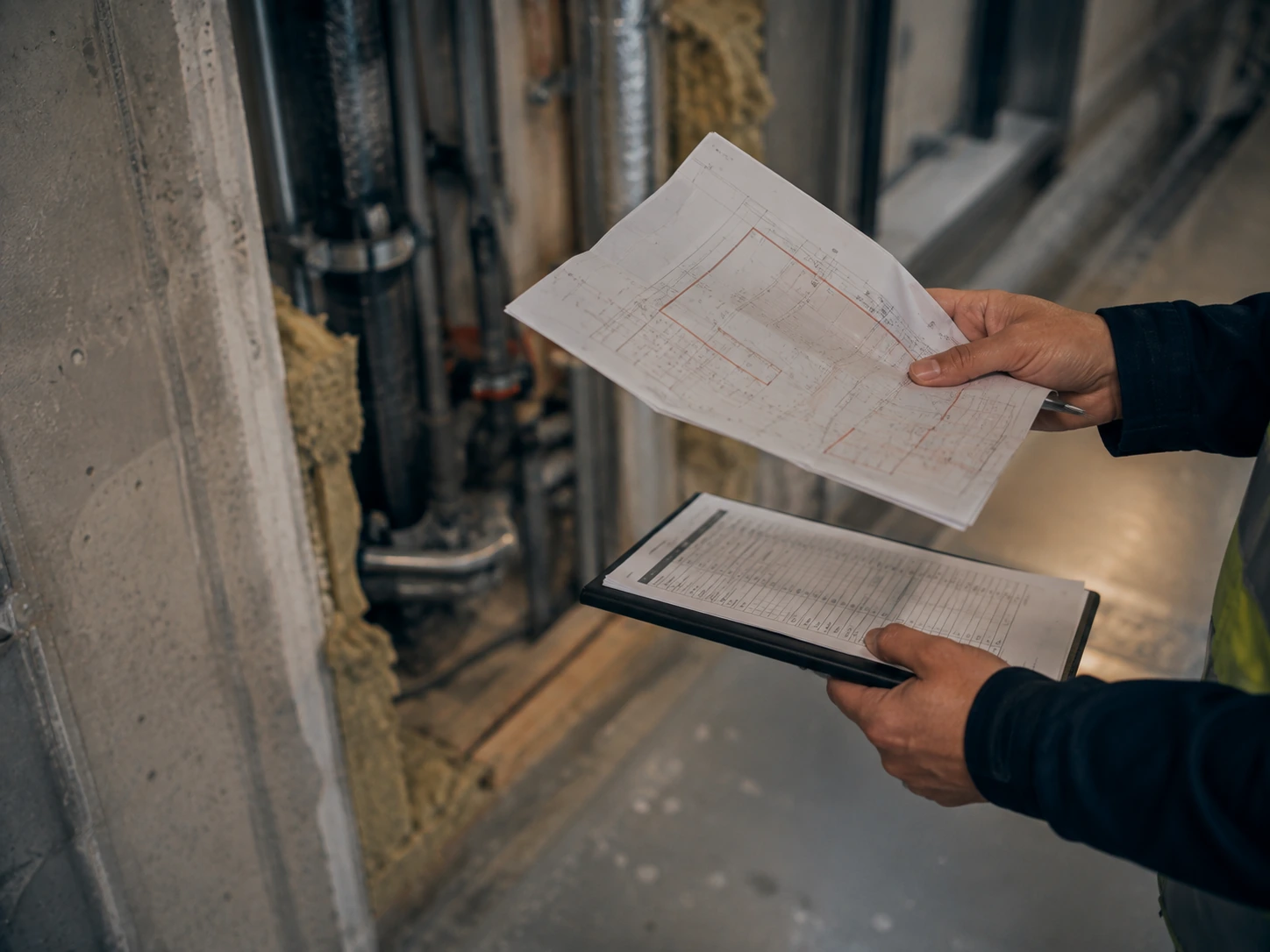
The official decision remains important. However, it does not automatically prove that a building or facility is still being operated under the same conditions years later. Uses change, fittings are added, technical systems are adapted and responsibilities change.
The central question is not just: Is it approved?
What matters is whether the actual condition still matches the verified basis today and whether the planned measures are effective in operation. This is exactly what a structured comparison is needed for.
Four verification steps for the initial comparison.
- Bring together the official decision, approved plans and existing fire protection documents in full.
- Record current use, occupancy, installations and technical changes on site.
- Assess deviations by impact, urgency and the evidence required.
- Put measures, responsibilities, deadlines and documentation into a reliable order.
When an in-depth assessment makes sense.
The comparison is particularly relevant for conversions, changes of use, recurring defects, unclear conditions in the official decision or technical systems whose documented design no longer matches the current condition.
What an official decision actually specifies.
A permit decision describes the approved condition of a commercial facility or building – the so-called consent (Konsens). This includes the submitted project with its plans and descriptions as well as the prescribed conditions. Anything that deviates from it is not covered by the decision, even if it has been operated that way for years.
Typical deviations in existing buildings.
- Additional storage areas or larger storage quantities than approved
- New machines, workplaces or changed operating hours
- Conversions, openings and new pipes or cables through fire compartments
- Removed fire doors or fire doors kept permanently open
- Changed uses of rooms or floors
- Technical systems that no longer correspond to the documented status
What applies legally.
Changes to an approved commercial facility that may affect the interests protected under § 74 (2) GewO generally require an amendment permit under § 81 GewO. Certain changes are exempt from the permit requirement or only need to be notified.
If a facility is changed without the required permit, the authority can impose provisional coercive and safety measures under § 360 GewO – up to shutting down parts of the facility. An amendment permit also requires a valid original consent. If official decisions or plans are missing, the permit status must therefore be clarified first.
In addition to trade law, the building permits under the building code of the respective federal province apply. As a rule, the principle of grandfathering only protects those who can prove a lawfully established condition.
How we bring the existing building and the permit back into line.
We research the permit status, compare it with the actual condition and assess every deviation. This results in a clear path: dismantling, adaptation, supplementary evidence or the submission of an amendment. More on this under Fire safety consulting and Permits and authorities.
Note: This article is for general information purposes and does not replace an individual assessment. The applicable official decisions, laws and guidelines are authoritative. As of: November 2026.
 German
 English